
Sell
Estimates with options and revisions, customer acceptance and signatures, a deposit on acceptance.
Built for made-to-order wood products. Not for plants that run the same panel all day.
For custom wood manufacturers that want production, labour, scheduling and money connected, without a year-long ERP project.
A general ERP needs a consultant to turn it into a wood shop.
MES systems are built for plants making the same product all day.
The production system knows nothing about the customer, the drawings or the install.
Hours make it to payroll and never make it to the job.
Estimates with options and revisions, customer acceptance and signatures, a deposit on acceptance.
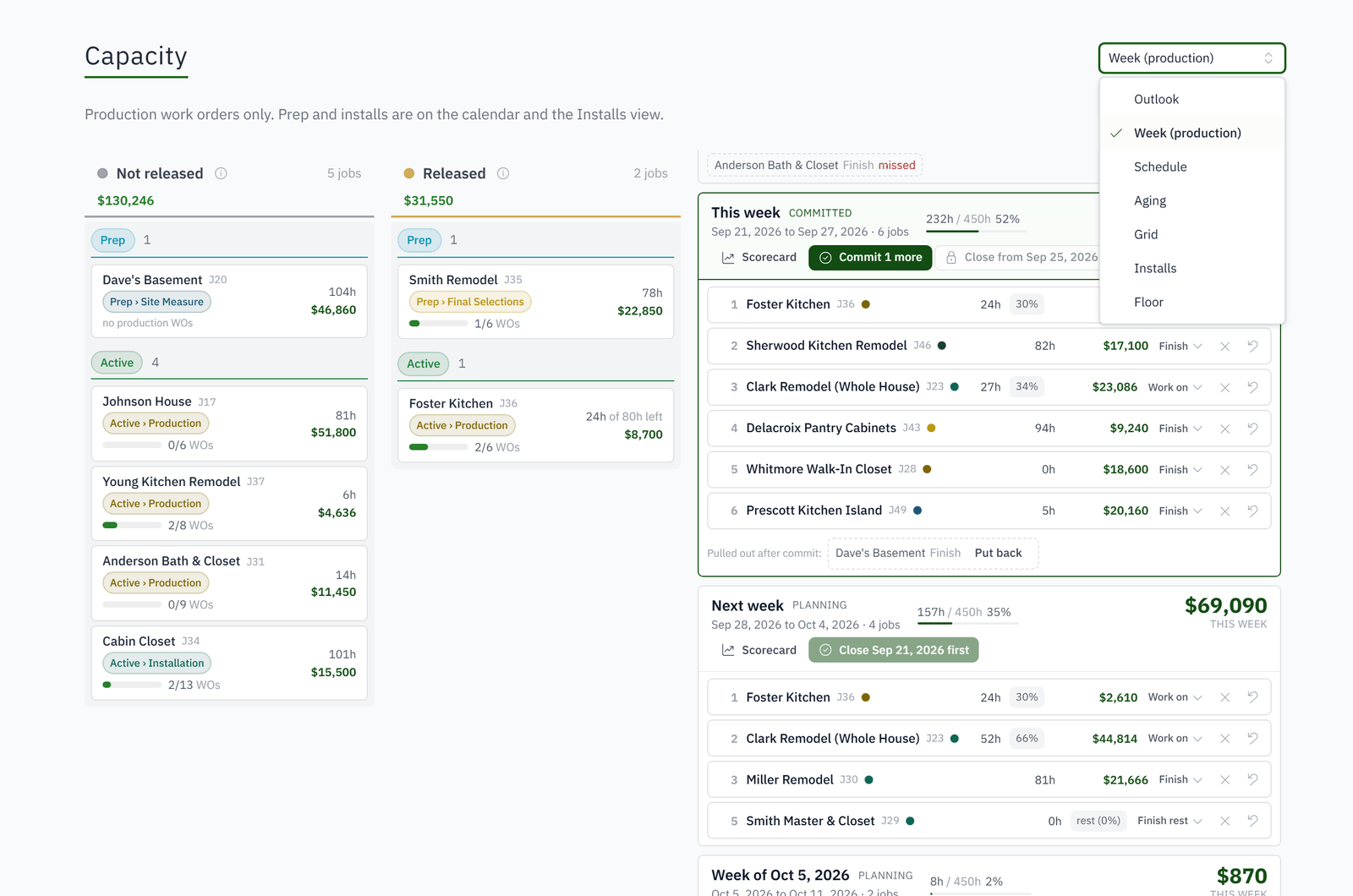
The week board for production, the install planner for crews, and department capacity worked out from the hours people actually log.
Work orders with template steps on the shop tablet, scans that start and finish a step, and a bill of materials and receiving at the door if you need them.
Progress invoices from the payment schedule, online payments, and a costing tab that compares what you quoted with what you bought and the hours you spent.
Software that runs a wood shop end to end: quoting, jobs, production, labour, purchasing, billing and reporting on one record, instead of a separate tool for each.
No. It is for made-to-order products: cabinetry, millwork, closets, furniture. Panel, plywood and lumber plants need a different kind of system.
Yes, when you want it: suppliers and price lists, purchase orders, receiving with labels and scanning, stock on hand, and a bill of materials per work order.
Cut lists by material with a rate per machine, and an optional day-by-day production schedule with a lane per machine. It does not try to control the machines themselves.
Weeks. We walk through how your shop works, set it up to match, and run a first live job before anything else is switched on.
No. It syncs customers, invoices, payments and hours with QuickBooks Online, which stays the ledger.