
Step 1
Bid and award
Keep contractors, contacts, estimate revisions, approvals and project value on the record that becomes the active project.
Give project managers, the shop, installers and ownership one current record instead of reconciling the project across email, spreadsheets and the accounting package.
Why it matters
For architectural millwork and commercial casework teams running long, revision-heavy projects across the office, the production floor and the field.
Bid details are typed again when the work becomes a project.
Drawing revisions and field photos lose their connection to the job.
Schedule changes are passed to each department by hand.
Clocked labor is hard to reconcile against estimated hours.
How it works
Step 1
Keep contractors, contacts, estimate revisions, approvals and project value on the record that becomes the active project.
Step 2
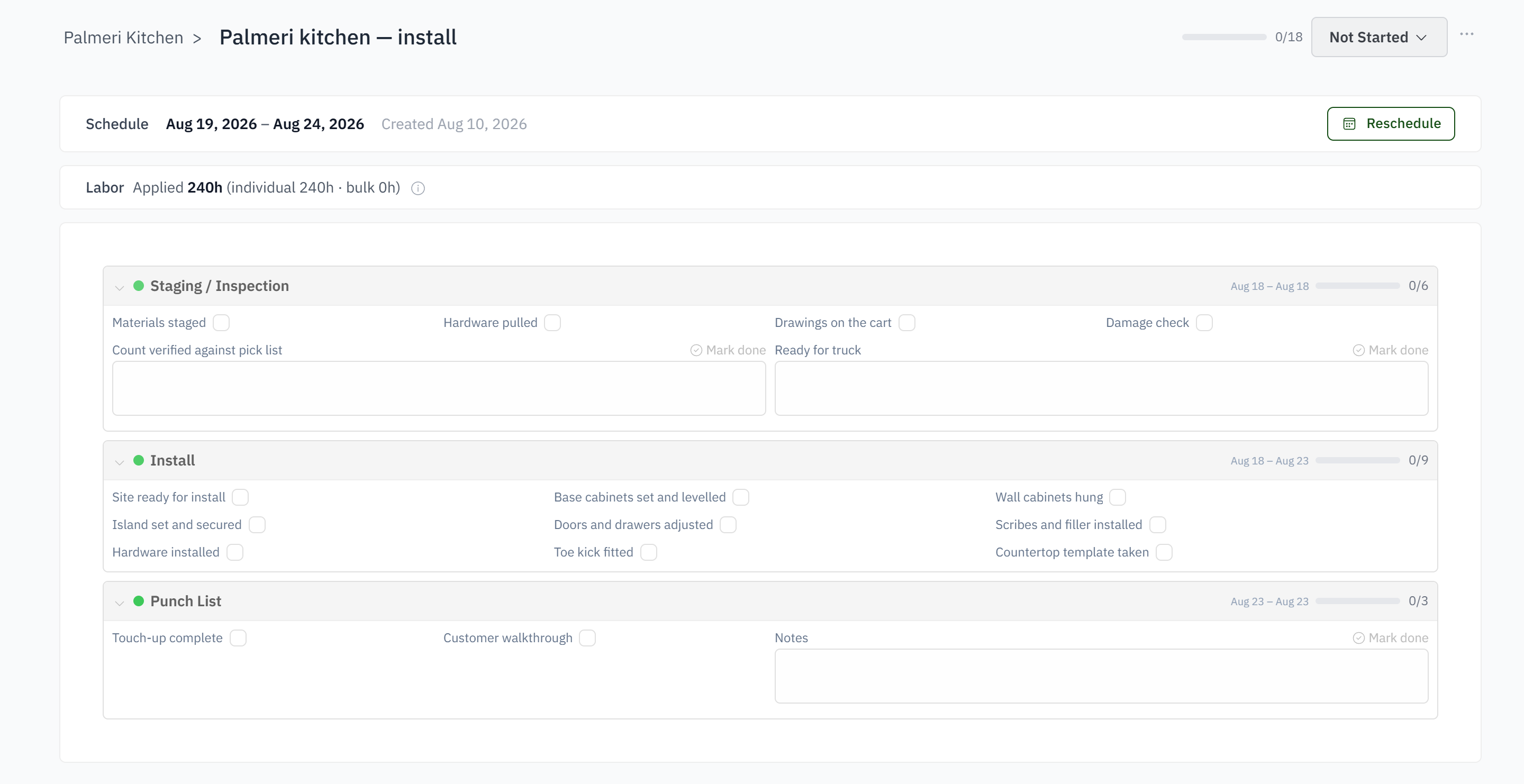
Track phases, statuses, tasks, calendar commitments, drawings, email and internal notes on one job, not in duplicate trackers.
Step 3
Move work orders through drafting, build, delivery and installation while the shop tablet and the installer app collect labor and checklist progress.
Step 4
Progress invoices fire from the payment schedule, payments land on the job, and job costing shows risk before the project closes.
Questions buyers ask
No. It complements design and engineering software by managing the commercial, project, production, field and financial workflow around the work.
Yes. Job statuses, phases, custom fields, forms, sheets and automations reflect the way the company already operates.
A payment schedule on the accepted estimate raises each invoice at its milestone, such as a deposit on award, a progress payment at a status, and the balance on completion.
Yes. Hours clocked on a work order are costed at each person's loaded rate and compared with the estimated hours and cost while the project is open.
Drawings and documents live in the job's folders, email attachments are filed once, and the shop sees the released set on its tablet.
Owner-led and midsize companies. A large plant that needs MES-grade machine control should look at an enterprise manufacturing system as well.
See it in action