
Establish the plan
Start with estimated revenue, cost, hours, and target margin from the job and its accepted estimate.
Stop waiting until month-end - or the next estimate - to discover that labor or material cost consumed the margin.
For owners and estimators who know the quoted margin but need the actual margin before closeout.
Estimated hours never meet the hours employees actually clock.
Material and labor are reviewed in separate reports.
Revenue, cost, and cash collection are mistaken for the same thing.
Overruns become visible only after invoicing is complete.
Start with estimated revenue, cost, hours, and target margin from the job and its accepted estimate.
Bring clocked labor and recorded material cost onto the job as the work happens.
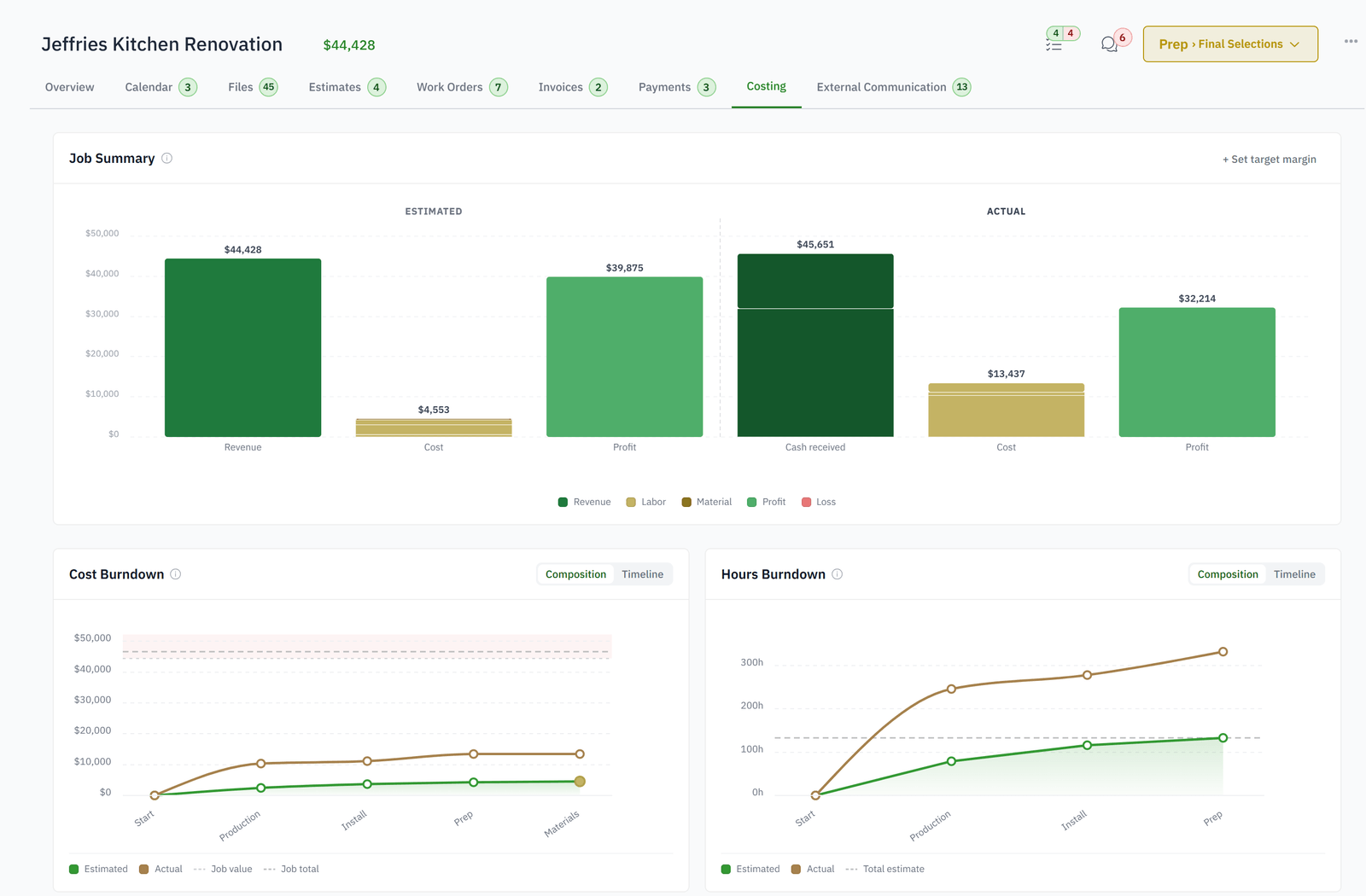
Review estimated versus actual revenue, cost, profit, margin, and hours with burndown views that show direction.
Investigate the records behind a number, correct an active overrun, and use completed performance to improve the next estimate.
Compare the plan with recorded performance while the job is still open. These sample values explain the view; they are not customer results.
The estimate's cost block, which is material, labor hours by department, markup and margin, against actual material from purchase orders and actual labor from hours clocked on the work orders.
Hours multiplied by each person's loaded rate, which is wage plus overhead. Bare wages stay in payroll; costing never uses them.
While the job is open. Every punch at the shop tablet and every received purchase order updates the job the same day.
Yes, when purchasing is part of your setup. Purchase orders and receipts land on the job, and the bill of materials shows what was planned against what was bought.
The report builder groups jobs by any field and opens the records behind a total. The material variance report does the same for material specifically.
No. It is operational job costing. QuickBooks stays the ledger and receives the invoices and payments.